 Volvenix
Be My Eyes vs AVA
AI-enhanced independent comparison — features, pros, cons, pricing and rankings.
 ChatGPT
  Claude
  Gemini
  Midjourney
  DALL-E
  Stable Diffusion
  Notion AI
  Canva
Canva  Grammarly
  GitHub Copilot
  ElevenLabs
  Perplexity
  Runway
  Synthesia
  Fireflies.ai
  Hugging Face Hub

| Dimension | Be My Eyes | AVA |
|---|---|---|
| Accuracy & Reliability | ||
| Ease of Use | ||
| Features & Capability | ||
| Value for Money | ||
| Performance & Speed | ||
| Popularity & Adoption |
Who each tool serves best — and when to pick the other one.
Blind or low-vision individuals seeking immediate, human-powered visual assistance for daily tasks.
- You need quick visual help from real people for daily tasks
- You want a free, easy-to-use app connecting to volunteers worldwide
- Your team requires an accessibility solution focused on human assistance
Users needing automated or AI-based accessibility tools or enterprise-level integration should look elsewhere.
- You need automated AI-based accessibility features
- Free-tier limits are a blocker for your organization's scale
- You require enterprise-grade integration or advanced customization
Access to a large, active volunteer community for live visual assistance.
Teams and organizations needing real-time captioning to support deaf or hard-of-hearing participants in meetings or events.
- You need live captions for meetings or events to support accessibility requirements.
- You want to include multiple speakers and languages in real-time transcription.
- Your team requires easy-to-use captioning to improve communication for deaf or hard-of-hearing users.
Users requiring deep integrations with collaboration tools or advanced transcription customization should consider other options.
- You need extensive integrations with third-party collaboration platforms.
- Free-tier limits are a blocker for your high-volume captioning needs.
- You require advanced transcription editing or customization features.
Real-time, multi-speaker captioning accuracy and accessibility focus.
A canonical comparison across capabilities common to this category. Vendor-specific extras appear below in "Highlighted Features".
| Capability | Be My Eyes | AVA |
|---|---|---|
|
Multi-language Support
Understands and generates content in multiple languages
|
✓ | ✓ |
|
Free Tier Available
Usable without payment (with usage limits)
|
✓ | ✓ |
Each tool's marketing-listed features. Where a feature appears under one tool but not the other, it usually reflects how the vendor describes their product — not a definitive capability gap.
- Live Video Calls — Connects users with volunteers via live video for assistance
- Volunteer Network — Global community of sighted volunteers
- Mobile App — Available on iOS and Android devices
- Donation Support — Users can donate to support the service
- Real-time Captioning — Converts live speech into captions instantly
- Multi-Speaker Support — Identifies and captions multiple speakers
- Transcription Export — Allows saving transcripts after sessions
- Custom vocabulary — Add specialized terms for better accuracy
- Extensive volunteer network worldwide
- Free and accessible mobile app
- Simple, user-friendly interface
- Supports multiple languages
- Strong community and social impact
- Accurate real-time captions
- Multi-speaker and multi-language support
- User-friendly interface
- Improves accessibility inclusivity
- Reliable transcription quality
- Relies entirely on volunteer availability
- No AI or automated assistance features
- Limited to mobile app platforms
- Limited third-party integrations
- No advanced transcription editing
- No mobile app available
—
- Blind users needing help identifying objects
- Low-vision users requiring assistance with reading labels
- Assistance with navigation or surroundings
- Help with technology setup or troubleshooting
- Support for daily tasks requiring visual confirmation
- Accessibility in corporate meetings
- Captioning for educational classrooms
- Live event transcription
- Support for deaf and hard-of-hearing users
- Multilingual communication facilitation
Where each tool runs — web, mobile, desktop, browser extension, API.
Natural languages each tool generates and understands. Primary languages are listed first.
What each tool can accept (input) and produce (output) — text, image, audio, video, code.
Free to use for individuals with optional donations; no paid tiers publicly listed.
-
Free
Free
Offers a free plan with basic captioning features and paid subscriptions for enhanced capabilities and team use.
-
Free
Free -
Pro
popular
$20.00/mo -
Team
$30.00/mo
Regulatory frameworks each tool claims compliance with (HIPAA, SOC 2, GDPR, etc.).
None listed.
Vendor-published numbers each tool highlights — usage scale, breadth, and operational stats. Different tools track different metrics, so direct row-by-row comparison usually isn't meaningful.
No metrics published.
- Captioning Accuracy High
Who each tool is positioned for — primary audience first.
How you can reach support — email, live chat, phone, community, docs.
- Email primary
- Email primary
How each tool is classified in the Volvenix catalog.
These vocabulary domains are managed in our catalog but not yet exposed at the tool level. We're tracking them for future expansion of this comparison.
- Encryption Types — AES-256, ChaCha20, RSA-2048, and similar at-rest/in-transit cipher families.
- Encryption Contexts — where encryption is applied (data at rest, in transit, end-to-end).
- Plan-tier Model Mapping — which AI models are available on which pricing tier (currently only the model list is tracked, not the per-plan availability).
- What is this tool?
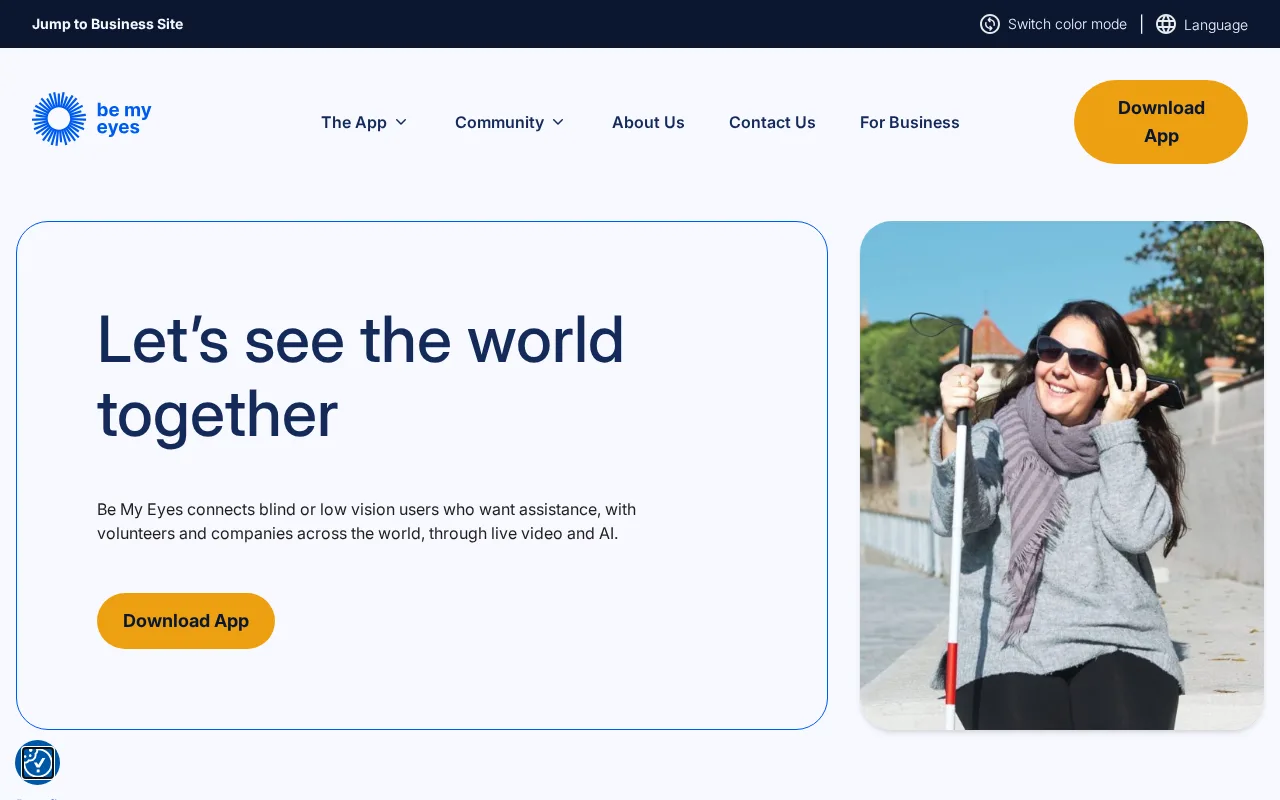
- Be My Eyes connects blind and low-vision users with volunteers via live video calls for visual assistance.
- How much does it cost?
- The app is free to use, supported by donations.
- Does it have a free plan?
- Yes, the entire service is free for users.
- What integrations does it support?
- Be My Eyes operates as a standalone mobile app without third-party integrations.
- Who is it best for?
- It is best for blind or low-vision individuals seeking human-powered visual assistance.
- What is this tool?
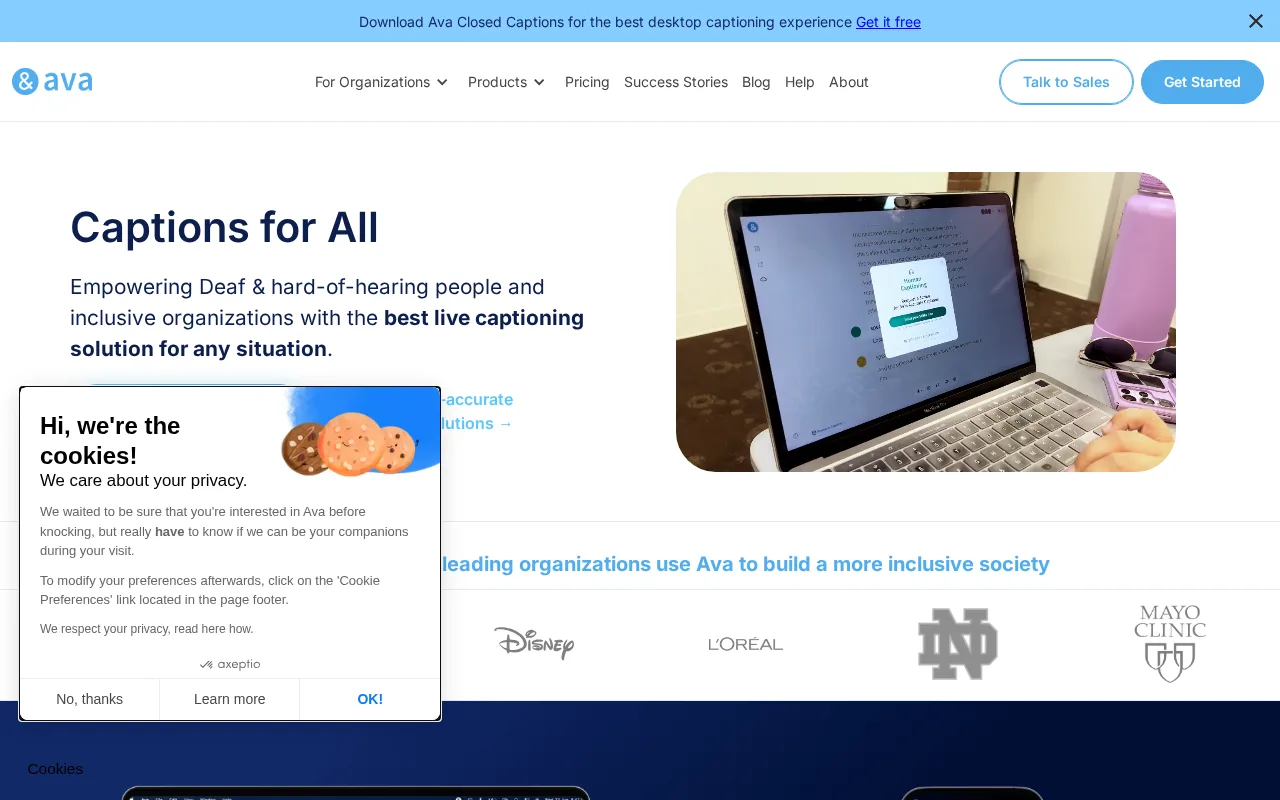
- AVA provides real-time speech-to-text captioning to improve accessibility in meetings, classrooms, and events.
- How much does it cost?
- AVA offers a free plan and paid subscriptions starting at $20 per month for additional features.
- Does it have a free plan?
- Yes, AVA offers a free plan with basic real-time captioning features.
- What integrations does it support?
- AVA currently has limited integrations and primarily functions as a standalone captioning service.
- Who is it best for?
- AVA is best for organizations needing real-time captions to support accessibility for deaf or hard-of-hearing participants.
| Info | Be My Eyes | AVA |
|---|---|---|
| Pricing | Freemium | Freemium |
| Category | Media, Entertainment & Creator AI | Media, Entertainment & Creator AI |
| Deployment | Cloud | Cloud |
| Learning Curve | Beginner | Beginner |
| Free Plan | ✓ | ✓ |
| AI Agent | ✗ | ✗ |
| Autonomy | Assistant | Assistant |
| Risk Tier | Low | Low |
 SubtitleBee
Be My Eyes narrowly leads AVA overall (5.4 vs 5.2). It scores higher on usability. The best choice depends on your specific workflow, team size, and budget.
ⓘ How Volvenix scores work
Scores are computed by Volvenix — not supplied by the vendors, and not third-party benchmark results. Each 0–10 dimension (Overall, Features, Usability, Support, Pricing) is a directional estimate aggregated from catalog signals — editorial cataloguing, content depth, engagement, and provider-reputation indicators — so treat them as a starting point, not a lab result.
Confidence reflects how complete the underlying data is for both tools; lower confidence means fewer signals were available, not a worse tool. We never accept payment for rankings or scores. More about how Volvenix works →