
OpenMined PySyft logo
Rank #450
FREEMIUM SELF HOSTED #1 in Federated Learning State of the Art

OpenMined PySyft Review — Federated Learning

PySyft enables privacy-preserving federated learning on decentralized data for collaborative AI development.
7 monthly visitors 9.9K GitHub stars 7 page views (30d)
Reviewed by Volvenix Editorial
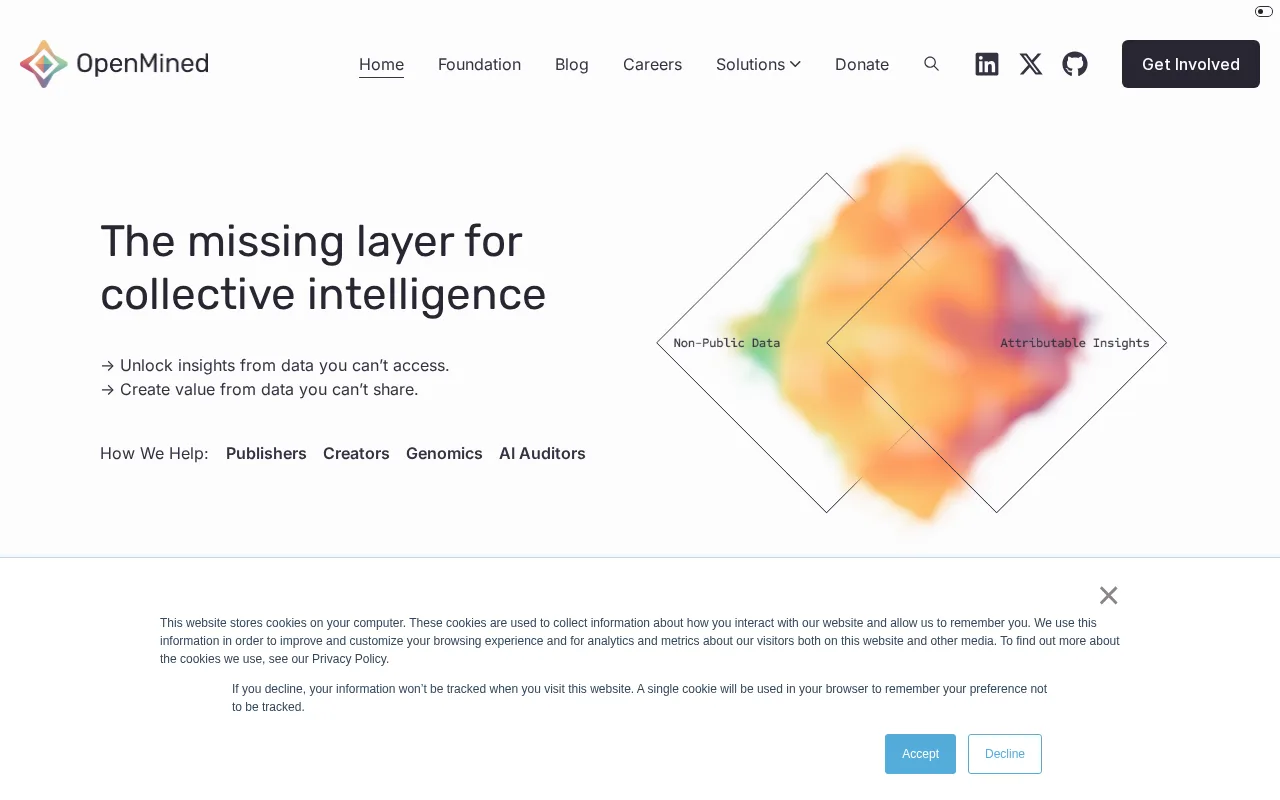
OpenMined PySyft — preview
7.5
Volvenix Verdict
AI-powered editorial review
OpenMined PySyft
A powerful open-source tool for privacy-preserving federated learning with a steep learning curve.
PROS
  • Robust privacy-preserving federated learning features
  • Open-source with active community and development
  • Supports encrypted multi-party computation
CONS
  • Steep learning curve for new users
  • Limited commercial support and documentation gaps

Is OpenMined PySyft Right for You?

A quick checklist to help you decide.

You need to collaborate on AI models without sharing raw data
You need a turnkey AI solution with minimal setup
You want to implement federated learning with privacy guarantees
Free-tier limits are a blocker for your large-scale projects
Your team requires open-source tools for secure multi-party computation
You require extensive commercial support and enterprise SLAs

Ideal for: Developers and researchers needing to train models collaboratively on sensitive, decentralized data without compromising privacy.

Less suited for: Users seeking plug-and-play AI tools or those without technical expertise in federated learning and privacy-preserving methods.

Bottom line: The ability to perform federated learning on decentralized data while ensuring privacy.

Editorial Review AI-generated
PySyft excels in enabling federated learning and privacy-preserving AI workflows, making it ideal for researchers and developers focused on data privacy. Its open-source nature and strong community support are major strengths. However, it requires advanced technical knowledge to implement effectively, and its documentation can be challenging for beginners. It is best suited for teams with expertise in machine learning and privacy technologies.

AI-assessed from 4 sources.

Pros & Cons

Pros

Enables secure federated learning on decentralized data
Open-source with transparent development
Strong focus on privacy and data security
Supports encrypted multi-party computation
Active community and ongoing improvements

Cons

Steep learning curve for beginners major
Workaround: Use community tutorials and start with basic examples
Limited commercial support options moderate
Documentation can be incomplete or technical moderate
Workaround: Engage with community forums for help
Who Is It For & What Can It Do
Best For
Developer / Engineer Data Scientist / Analyst Advanced curve
AI Capabilities
Differential Privacy Encrypted Multi-party Computation Federated Learning
Key Features
Federated Learning
Train models on decentralized data without sharing raw data
Encrypted Computation
Supports multi-party computation with encryption
Differential Privacy
Implements differential privacy techniques for data protection
Open-Source
Fully open-source library under MIT license
Integration with PyTorch
Seamless integration with PyTorch for model development
Best Use Cases
Collaborative model training across organizations Privacy-preserving AI research Healthcare data analysis without data sharing Financial data modeling with confidentiality Secure multi-party machine learning experiments
Available Platforms
Self-Hosted
Integrations
Inputs & Outputs
Codeinput Codeoutput
Supported Languages
English
Security & Compliance
Compliance Standards
GDPR
Privacy · EU
Pricing Plans

Free

Open-source core access

Free
 
  • Access to PySyft library
  • Community support

Free to use open-source core with optional paid services; pricing details for paid tiers are not publicly listed.


Price Range
Free $0–$0
Support Channels
Did you find this page helpful?
Frequently Asked Questions
What is this tool?
PySyft is an open-source library for privacy-preserving federated learning on decentralized data.
How much does it cost?
PySyft is free to use as an open-source library; paid services are not publicly detailed.
Does it have a free plan?
Yes, the core PySyft library is free and open-source.
What integrations does it support?
PySyft integrates primarily with PyTorch for model development.
Who is it best for?
It is best for developers and researchers needing secure federated learning on sensitive data.
User Reviews

No reviews yet. Be the first to review OpenMined PySyft!

Write a Review
Discussion
No discussions yet. Start the conversation!
0 tools selected
Compare Now →
OpenMined PySyft Visit Tool