
Xanadu PennyLane logo
Rank #256
MULTI-SYSTEM INTEGRATION FREEMIUM CLOUD #1 in Multi-system Integration State of the Art

Xanadu PennyLane Review — Quantum-Classical ML Integration

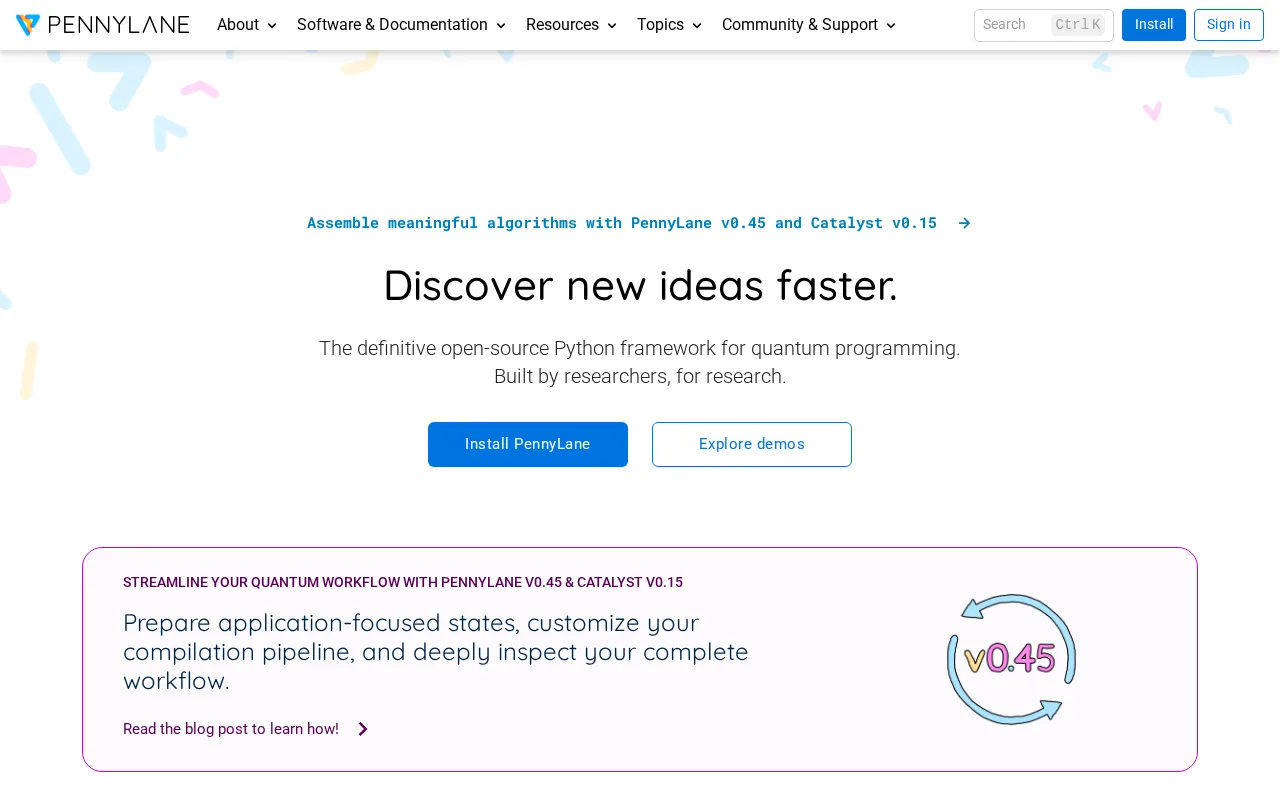
PennyLane bridges quantum devices and classical ML frameworks for hybrid quantum-classical computing.
24 monthly visitors 3.2K GitHub stars 24 page views (30d)
Reviewed by Volvenix Editorial
8.0
Volvenix Verdict
AI-powered editorial review
Xanadu PennyLane
A powerful open-source tool for hybrid quantum-classical ML, ideal for researchers exploring quantum algorithms.
PROS
  • Supports multiple quantum hardware and simulators
  • Integrates with popular classical ML frameworks
  • Differentiable programming enables gradient-based optimization
  • Open-source with active community
  • Extensible and flexible for research
CONS
  • Steep learning curve for quantum computing beginners
  • Limited turnkey or no-code features

Is Xanadu PennyLane Right for You?

A quick checklist to help you decide.

You want to develop hybrid quantum-classical machine learning models with gradient optimization
You need a no-code or low-code quantum AI solution for immediate deployment
You need to experiment with quantum algorithms using multiple hardware backends and simulators
Free-tier limits are a blocker for large-scale quantum hardware experiments
Your team requires an open-source, extensible platform for quantum machine learning research
You require enterprise-grade support and SLAs for production quantum workloads

Ideal for: Researchers, developers, and quantum computing enthusiasts aiming to build hybrid quantum-classical machine learning models.

Less suited for: Beginners without quantum computing background or teams seeking turnkey quantum AI solutions without coding.

Bottom line: Ability to seamlessly integrate quantum devices with classical ML frameworks using differentiable programming.

Editorial Review AI-generated
PennyLane excels in providing a flexible and extensible platform for quantum machine learning, supporting multiple quantum hardware backends and classical ML libraries like PyTorch and TensorFlow. Its differentiable programming model is a standout feature, enabling gradient-based optimization across quantum and classical components. However, it requires users to have a solid understanding of quantum computing concepts, which may limit accessibility for beginners. The open-source nature and active community support make it a valuable resource for academic and industrial quantum research teams.

AI-assessed from 4 sources.

Pros & Cons

Pros

Supports multiple quantum hardware and simulators
Integrates with classical ML frameworks like PyTorch and TensorFlow
Differentiable programming for hybrid quantum-classical models
Open-source with active community and extensive documentation
Flexible and extensible for research and development

Cons

Steep learning curve for users new to quantum computing moderate
Workaround: Use tutorials and community resources to build foundational knowledge
Limited no-code or turnkey solutions for non-experts moderate
Who Is It For & What Can It Do
AI Capabilities
Model Training Quantum Algorithm Development
Key Features
Quantum Hardware Support
Connects to multiple quantum devices and simulators
Classical ML Integration
Works with PyTorch, TensorFlow, and JAX
Differentiable Programming
Enables gradient-based optimization across quantum and classical parts
Open-Source Library
Available under Apache 2.0 license on GitHub
Cloud Quantum Hardware Access
Optional paid access via partners
Best Use Cases
Hybrid quantum-classical machine learning research Quantum algorithm development and testing Quantum hardware benchmarking Educational quantum computing projects Optimization of quantum circuits with classical ML
Available Platforms
API / SDK CLI Tool Linux macOS Windows App
Integrations
Inputs & Outputs
Codeinput Codeoutput
Supported Languages
English
Security & Compliance
Certifications
SOC 2 Type II
AICPA
ISO 27001
ISO
GDPR
European Union
Compliance Standards
GDPR
Privacy · EU
Pricing Plans

Free

Best for individuals

Free
 
  • Access to open-source PennyLane library
  • Simulators and limited quantum hardware access

Free open-source core library with optional paid cloud quantum hardware access; pricing varies by provider.


Support Channels
Did you find this page helpful?
Frequently Asked Questions
What is this tool?
PennyLane is an open-source library for integrating quantum computing with classical machine learning workflows.
How much does it cost?
The core PennyLane library is free; paid costs apply for cloud quantum hardware access via partners.
Does it have a free plan?
Yes, the open-source library is free to use with simulators and limited hardware access.
What integrations does it support?
It integrates with PyTorch, TensorFlow, JAX, and supports multiple quantum hardware backends.
Who is it best for?
Researchers and developers building hybrid quantum-classical machine learning models.
User Reviews

No reviews yet. Be the first to review Xanadu PennyLane!

Write a Review
Discussion
No discussions yet. Start the conversation!
0 tools selected
Compare Now →
Xanadu PennyLane Visit Tool